Why Waterproof Shade Sails May Not Work for You
Waterproof shade sails offer excellent rain protection and can transform outdoor spaces into usable areas throughout the year. Many homeowners and businesses install waterproof shade sails over patios, outdoor dining areas, walkways, and commercial spaces to create reliable weather protection.
However, waterproof shade sails are not suitable for every location or installation. Unlike breathable shade cloth sails, waterproof PVC shade sails require very specific design conditions to perform correctly. If these conditions are not met, water pooling, structural stress, and premature damage can occur.
Understanding these requirements helps ensure you choose the right type of shade structure for your property.
Waterproof Shade Sails Require Significant Pitch
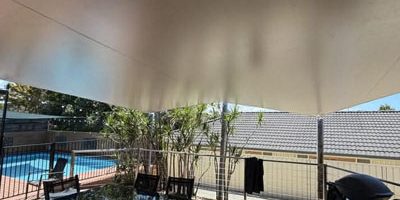
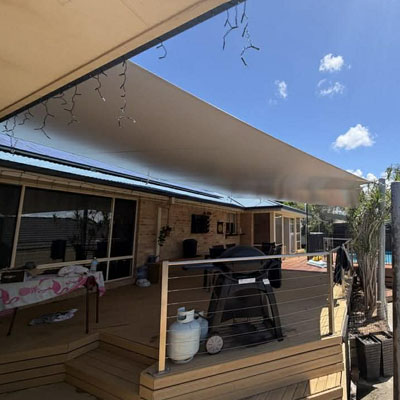
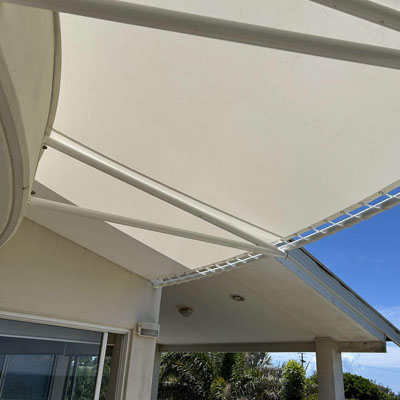
One of the most important design requirements for waterproof shade sails is adequate fall or pitch. Waterproof materials cannot allow water to pass through the fabric, so the structure must direct rainwater away quickly. Without sufficient slope, rainwater can collect in the middle of the sail and create heavy loads that strain the fabric and anchor points.
Key pitch considerations include:
- Waterproof shade sails usually require a minimum fall
- PVC is recommended a minimum of 5:1, 5 metre shade sail we recommend a 1 metre pitch per 5 metres of length
- Waterproof shade sails are recommended a minimum of 4:1, 4 metre shade sail we recommend a 1 metre pitch per 4 metres of length
- The sail must allow water to run off freely in one direction
- Anchor points must be installed at significantly different heights
- Flat installations will almost always lead to water pooling
- The surrounding structures must support the additional tension required
If the installation area does not allow this steep pitch, a waterproof shade sail may not perform correctly and could suffer structural problems during heavy rain.
Waterproof Materials Do Not Breathe
Waterproof shade sails typically use PVC membrane or similar coated fabrics. These materials completely block rainwater, but they also prevent air from passing through the sail. This can create a noticeably different environment underneath the structure compared to breathable shade cloth.
Common effects include:
- Reduced airflow under the sail
- Higher temperatures on hot days
- Increased wind pressure during storms
- Greater tension on posts and attachment points
- Less natural cooling compared to knitted shade fabrics
Because waterproof sails do not breathe, they often feel warmer than traditional shade sails. In many situations, a breathable fabric like HDPE may provide more comfortable shade in hot climates.
Waterproof Shade Sails Need Stronger Structures
Waterproof shade sails experience higher loads than breathable shade sails because they catch both wind and rain. When rainwater runs off the sail, it creates additional force along the fabric and attachment points. For this reason, waterproof installations usually require stronger structural components.
Typical structural requirements include:
- Heavier steel posts with deeper footings
- Engineered mounting points
- Higher tension during installation
- Professional structural design in many cases
- Greater spacing and layout planning
These additional requirements often increase installation complexity compared to standard shade sails. Proper engineering ensures the structure can handle rainwater runoff and strong winds.

Installation Locations May Limit Waterproof Designs
Not every outdoor area allows the height variation required for waterproof shade sails. Many residential backyards, courtyards, or commercial spaces have limited attachment points or structural restrictions.
When height differences are not possible, waterproof sails may struggle to perform effectively.
Common installation challenges include:
- Low roof lines limiting anchor height
- Nearby fences or walls restricting positioning
- Small yards with limited space for slope
- Existing structures that cannot handle high tension
- Trees or obstacles interfering with water runoff
In these situations, breathable shade sails often provide a more flexible and practical shading solution.
Get Expert Advice on Waterproof Shade Sails
Choosing between PVC/Waterproof shade sails and standard shade sails is not always straightforward. Every property has different height limitations, structures, wind exposure, and drainage considerations that influence which solution will perform best.
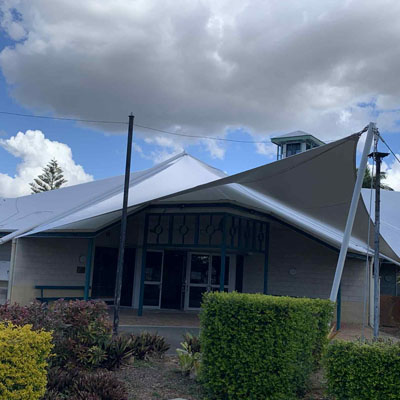
At Newcastle Shade Sails, we assess each project individually to determine whether a waterproof shade sail will work correctly in your space. If the conditions are not suitable, we can recommend alternative shade solutions that still provide excellent sun protection and long-term durability.
Contact Newcastle Shade Sails today by calling (02) 4040 9920 or contact us online to discuss your project and receive professional advice on the best shade solution for your space.
Frequently Asked Questions About Waterproof Shade Sails
Do waterproof shade sails need a slope?
Yes. Waterproof shade sails require a significant pitch to allow rainwater to run off the fabric. Without adequate fall, water can pool and damage the structure.
Can waterproof shade sails be installed flat?
No. Flat installations will cause water pooling. Waterproof sails must be installed with noticeable height differences between anchor points.
Are waterproof shade sails hotter than normal shade sails?
They can be. Waterproof PVC fabrics do not allow air to pass through, which reduces airflow and can make the area underneath feel warmer.
Do waterproof shade sails require stronger posts?
Yes. Waterproof sails experience higher loads due to rainwater and wind pressure, so they typically require stronger posts and deeper footings.
Are waterproof shade sails suitable for all backyards?
Not always. Many backyards do not allow the steep pitch or structural support required for waterproof shade sails.